Rovaniemi is the capital of Lapland, Finland’s northernmost province, and a university town of about 65,000 people. It lies at the meeting of the Kemijoki and Ounasjoki rivers, some eight kilometres south of the Arctic Circle and more than 800 kilometres north of Helsinki. For visitors it is two things at once: a small, modern, easy-going city, and the doorstep of a very large wilderness.
Rovaniemi at a glance
- Country and region: Finland, Lapland.
- Language: Finnish; English is spoken almost universally in tourism.
- Currency: the euro. Cards and contactless payment are accepted practically everywhere, including on buses and at market stalls.
- Time zone: Eastern European Time, one hour ahead of Central Europe and two ahead of the UK.
- Electricity: 230 V, European two-pin plugs (types C and F).
- Emergency number: 112.
- Tap water: excellent everywhere.
How many days?
Three nights is the realistic minimum in winter: enough for Santa Claus Village, two safaris and two or three evenings to try for the northern lights. Four or five nights is better. It lets you add a day trip, take the weather in your stride and avoid the trap of doing three cold activities a day. In summer, two or three nights cover the city and the midnight sun. Our 3, 4 and 5-day itineraries lay out the options.
A very short history
People have lived at this river junction for thousands of years. A trading village grew here on furs, salmon and, from the 19th century, timber floated down the rivers; gold rushes further north brought more traffic. By the 1930s Rovaniemi was a boom town.
In the Second World War it was a base for German troops, then Finland’s co-belligerents against the Soviet Union. When Finland made peace with Moscow in 1944 and had to drive the Germans out, the retreating army burned the town in October of that year. Some 90 per cent of its buildings were destroyed.
Reconstruction followed a plan by the architect Alvar Aalto, laid out in the shape of a reindeer’s head and antlers. In 1950 Eleanor Roosevelt came to see the rebuilding, and a cabin was built for her visit on the Arctic Circle — the seed of today’s Santa Claus Village. The modern tourist boom began in the 1980s, when Rovaniemi was promoted as the official hometown of Santa Claus. Find the full story at Arktikum.
 Santa & the Arctic Circle
 Santa Claus Village
Meet Santa on the Arctic Circle, any day of the year
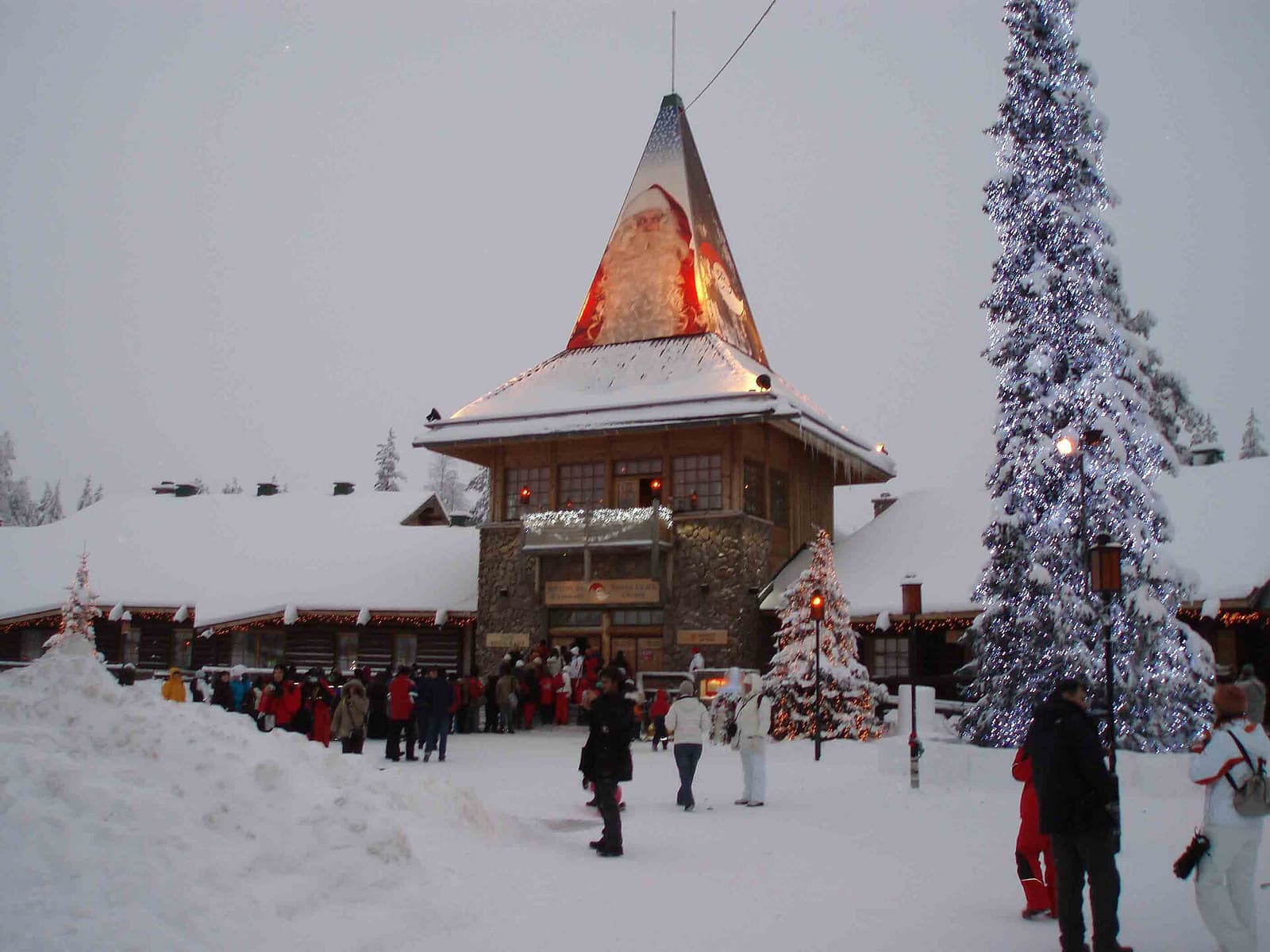
Eight kilometres north of the city centre, a cluster of log buildings sits right on the painted line of the Arctic Circle. Here you can meet Santa Claus in his office, send post with a special Arctic Circle postmark from his Main Post Office, ride behind reindeer and huskies and shop for Lappish crafts. Entry to the village is free and it is open every day; you pay only for activities, souvenirs and the official photo with Santa.
 Santa & the Arctic Circle
 SantaPark
Santa’s home cavern, deep inside a hill
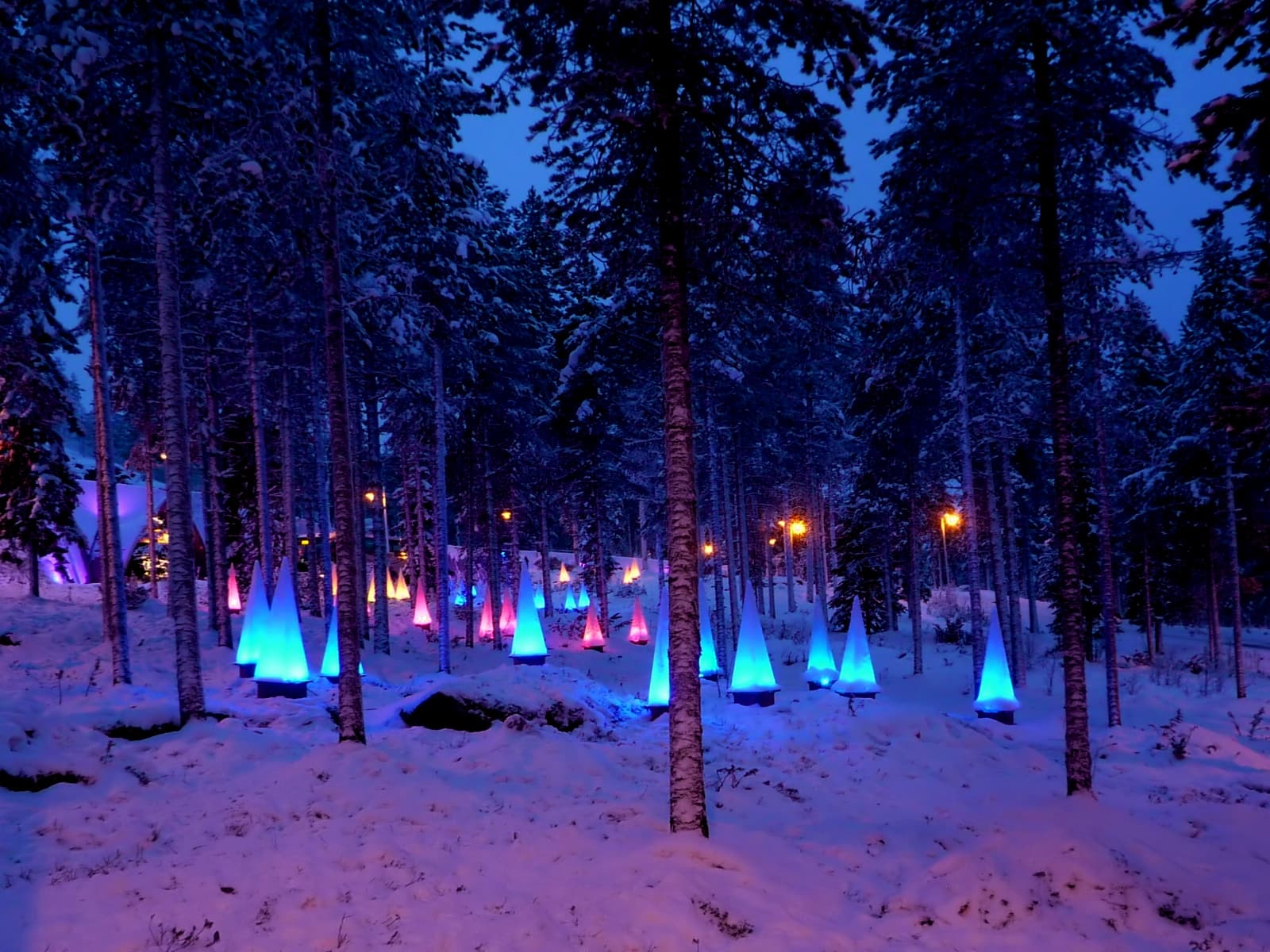
A Christmas theme park built underground in the rock of Syväsenvaara hill, about two kilometres from Santa Claus Village. Inside are an Elf School, a gingerbread bakery, an ice gallery, a small train ride, an elf show and Santa’s own office. One ticket covers everything, and it is all indoors — a blessing in deep cold. It opens for limited seasons only, mainly around Christmas.
 Santa & the Arctic Circle
 Arctic SnowHotel & Glass Igloos
A hotel carved from snow, rebuilt every winter
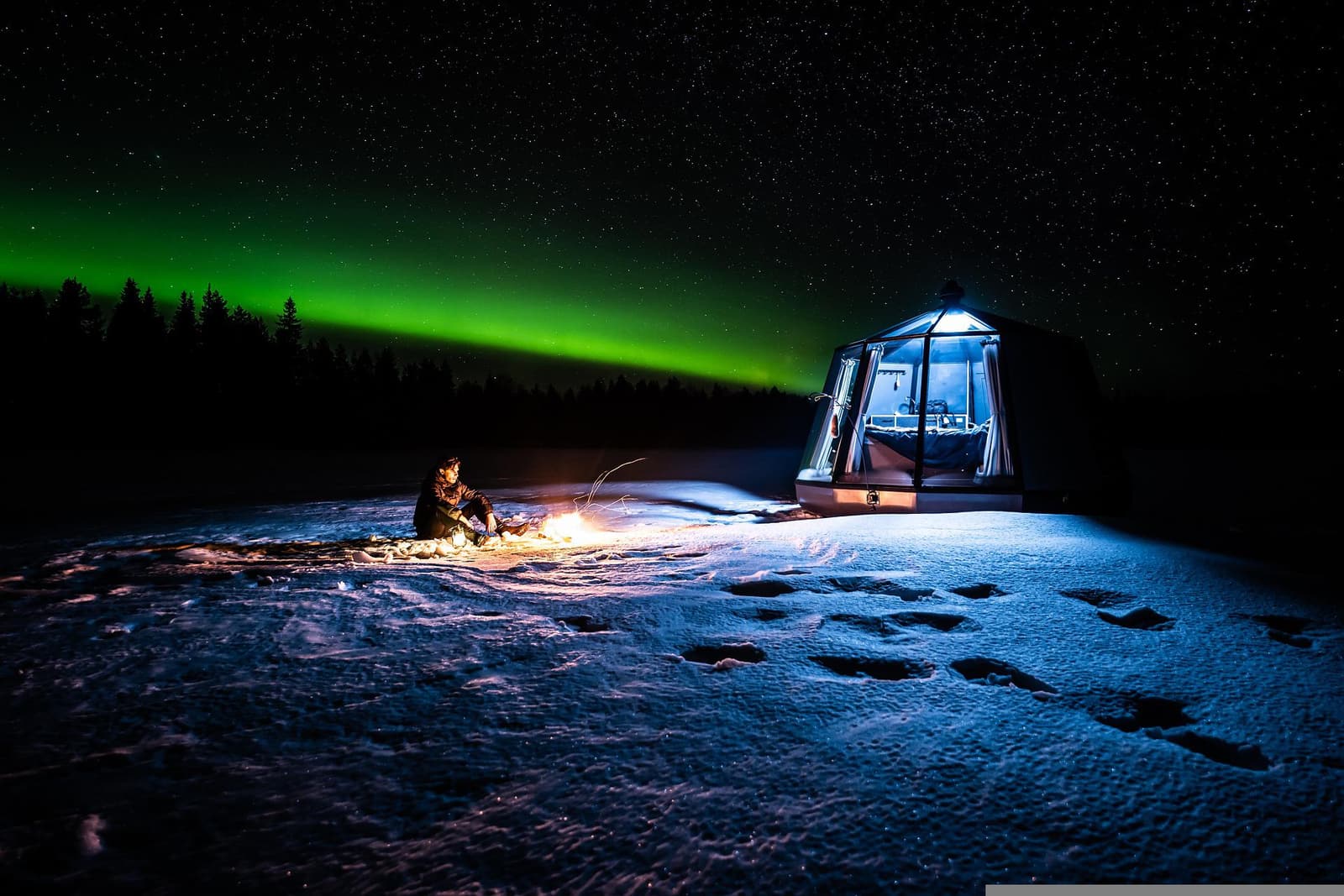
On the shore of Lake Lehtojärvi at Sinettä, about half an hour north-west of Rovaniemi, a complete hotel is built from snow and ice each December: sculpted bedrooms, an ice restaurant, an ice bar, a chapel and even a snow sauna. Beside it stand heated glass igloos for watching the sky in comfort. Day visitors are welcome in the snow season, and you can stay the night in either.
 Rovaniemi city
 Arktikum
The museum that explains the Arctic
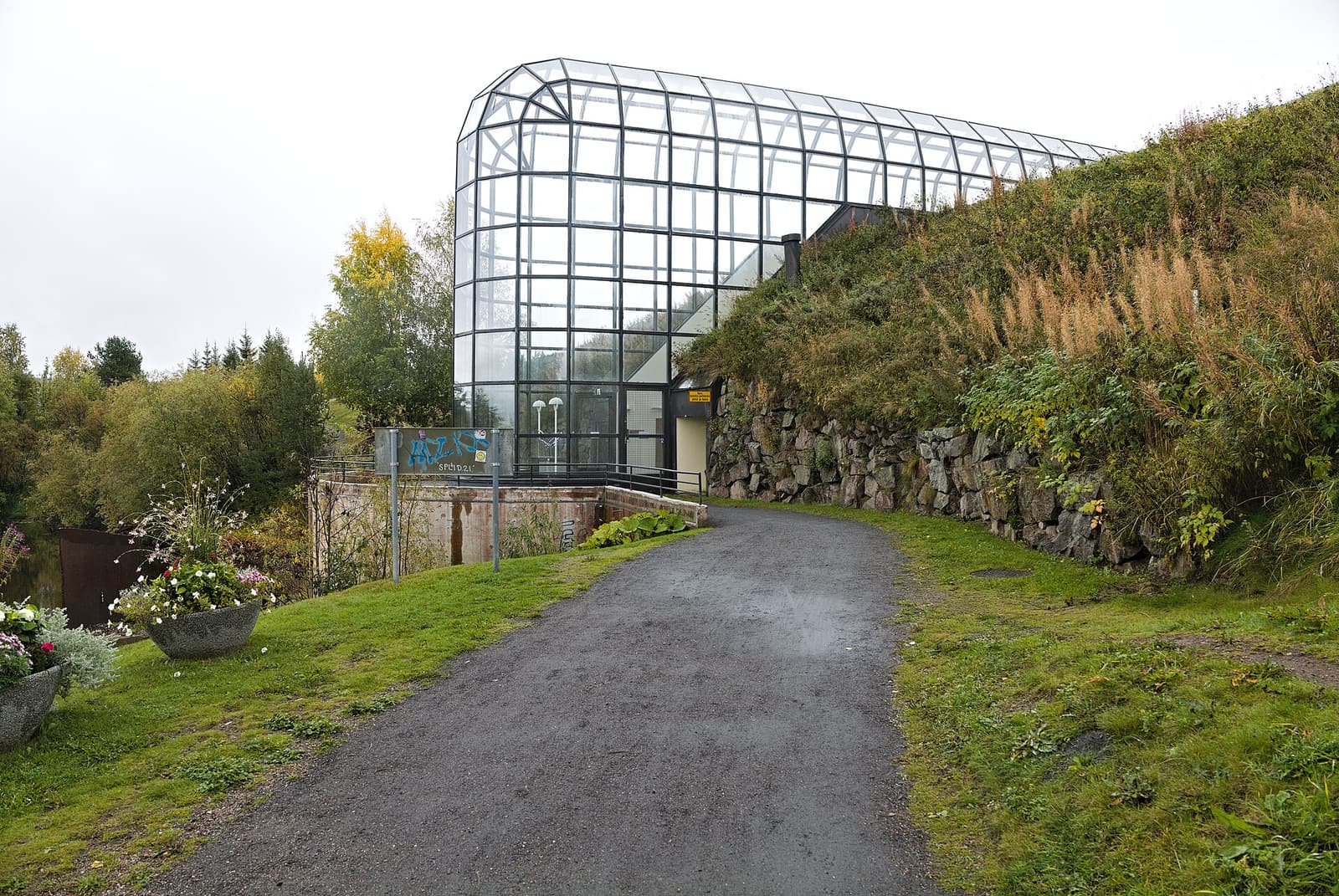
Rovaniemi’s outstanding museum and science centre, recognisable by the 172-metre glass corridor that points north towards the river like a gateway to the Arctic. It houses the Arctic Centre of the University of Lapland and the Regional Museum of Lapland, with exhibitions on polar nature, climate, the Sámi and other northern peoples, and the wartime destruction and rebuilding of the town.
What to wear in winter
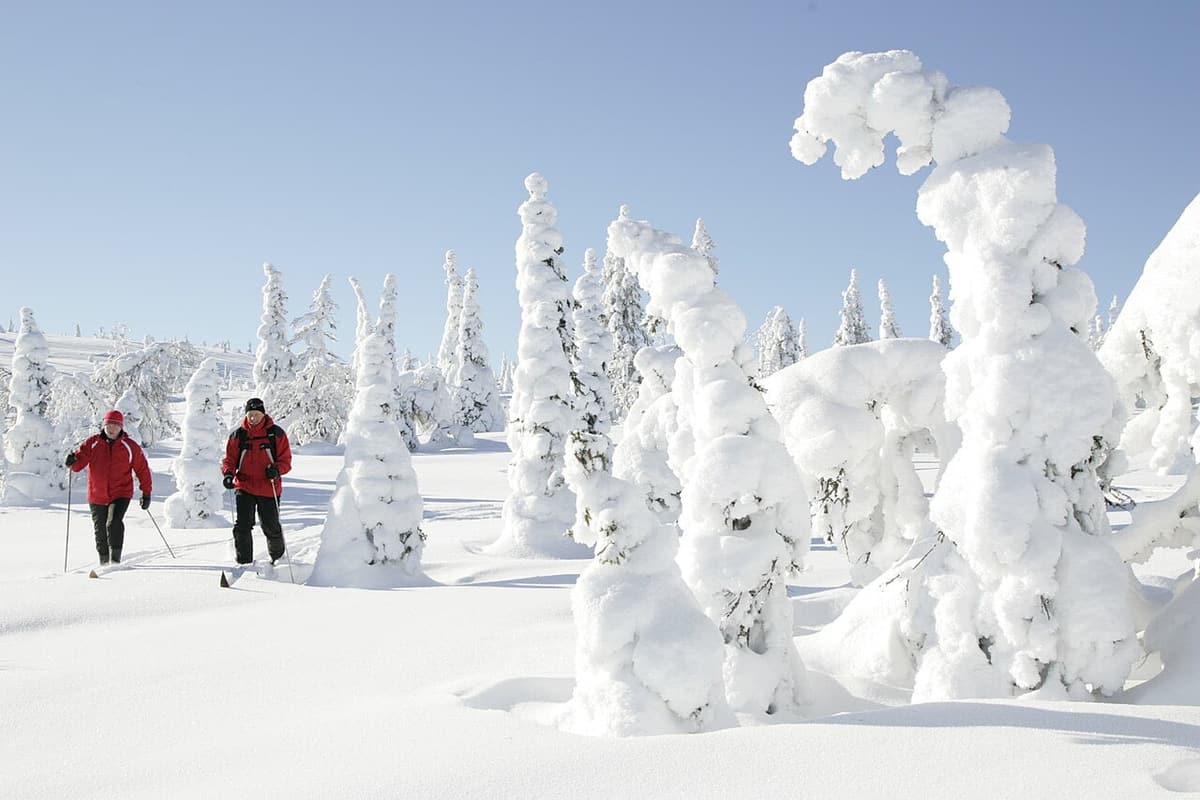
Cold is the thing first-time visitors worry about most and, properly dressed, the thing that troubles them least. The Lapland cold is dry and usually still; −15 °C here feels kinder than a damp, windy zero further south. The secret is layers, and keeping hands, feet and face protected.
- Base layer: long-sleeved thermal top and leggings, ideally merino wool. Avoid cotton next to the skin — it holds moisture and chills you.
- Mid layer: a fleece or wool jumper; add a second in deep cold. Fleece-lined or wool trousers.
- Outer layer: an insulated, windproof jacket (down or synthetic) long enough to cover your hips, and padded ski or snow trousers.
- Feet: insulated winter boots with thick soles, a size larger than usual so that warm air can circulate, and wool socks — two pairs in deep cold, but never so tight that your toes cannot move.
- Hands: mittens are far warmer than gloves. Wear thin liner gloves underneath so you can use a camera or phone without baring your skin.
- Head and face: a warm hat that covers your ears, and a neck tube or balaclava that you can pull over your nose.
- Extras: chemical hand and toe warmers, lip balm and moisturiser (the air is extremely dry), sunglasses for March, a swimsuit for saunas and hot tubs, and a headtorch.
Phones and cameras lose battery fast in the cold. Keep them in an inside pocket, carry a power bank, and let a cold camera warm up slowly inside its bag to avoid condensation.
In summer pack as for a cool northern holiday: layers, a waterproof, walking shoes — and insect repellent for the forest from mid-June to early August.
Daylight, darkness and the aurora
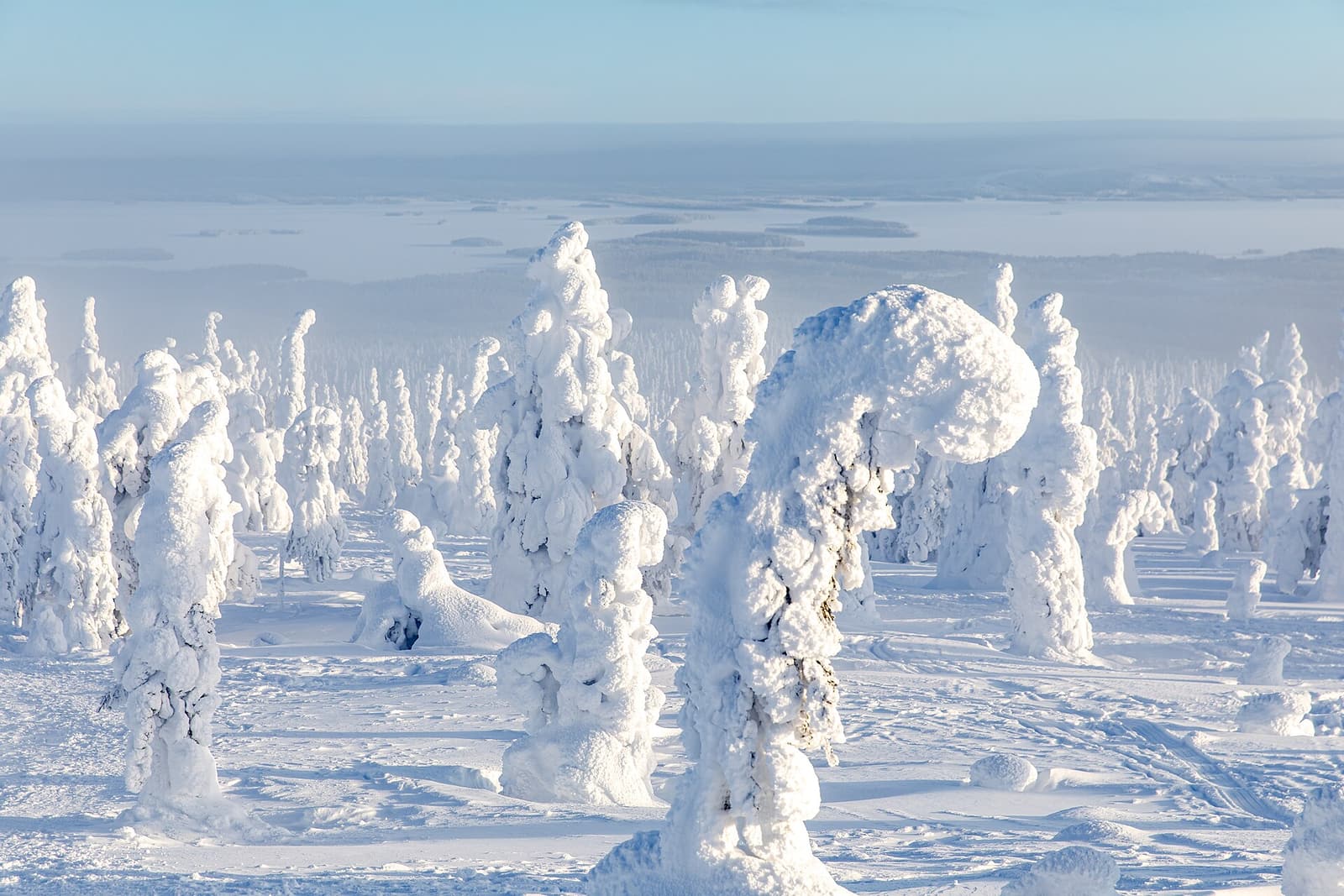
- December: around the winter solstice the sun barely clears the horizon — a couple of hours of daylight at most, wrapped in a long blue-and-pink twilight. It is dim rather than black, and the snow reflects every bit of light.
- February: seven to nine hours of daylight, lengthening fast.
- March: day and night roughly equal; brilliant sun on deep snow.
- June to early July: the midnight sun — it does not set at all for about a month.
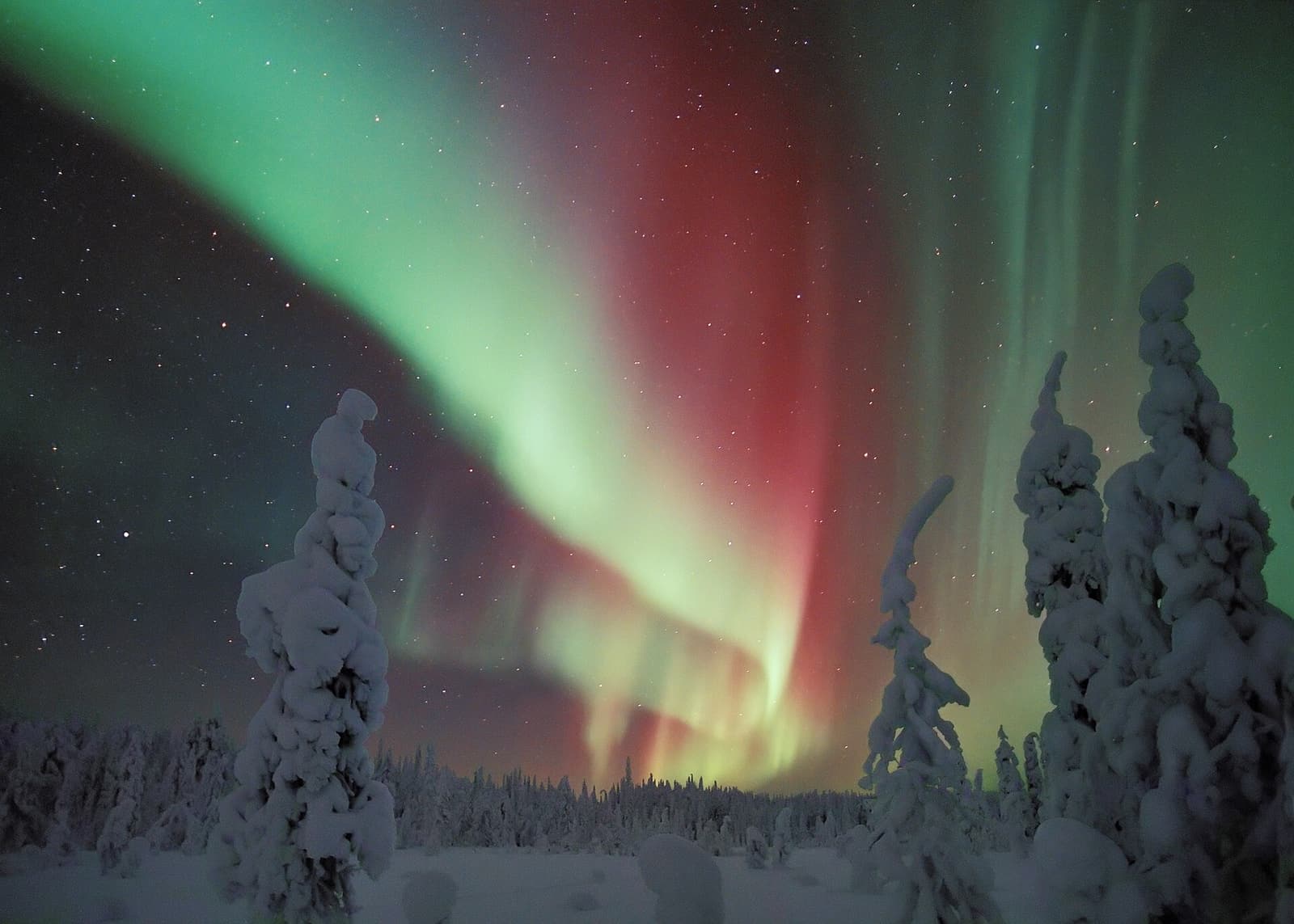
- Northern lights: possible on any dark, clear night from late August to early April. See the northern lights guide.
Money and costs
Finland is not a cheap country and Lapland in winter is its most expensive corner, but costs are predictable.
- Activities are the big item: roughly €100–200 per adult for a half-day safari, less for children. A northern lights minibus tour is among the cheaper options; the icebreaker costs several hundred euros.
- Eating out: a weekday lunch buffet is the bargain of Finnish life, often €13–16 with salad, bread and coffee. Dinner mains in a good restaurant are typically €25–40.
- Supermarkets are well stocked and reasonably priced; self-catering families save a great deal.
- Alcohol is heavily taxed. Beer and cider are sold in supermarkets; wine and spirits only in the state-run Alko shops.
- Tipping is not expected. Service is included; rounding up is a friendly gesture, no more.
- Free: Santa Claus Village entry, meeting Santa, the Ounasvaara trails, the Arctic Circle Hiking Area and the northern lights themselves.
What to eat
- Sautéed reindeer (poronkäristys): thin shavings of reindeer fried in butter, served on mashed potato with lingonberries and pickled cucumber. The classic dish of Lapland.
- Salmon soup (lohikeitto): creamy, with potato and dill — the best possible lunch after a cold morning.
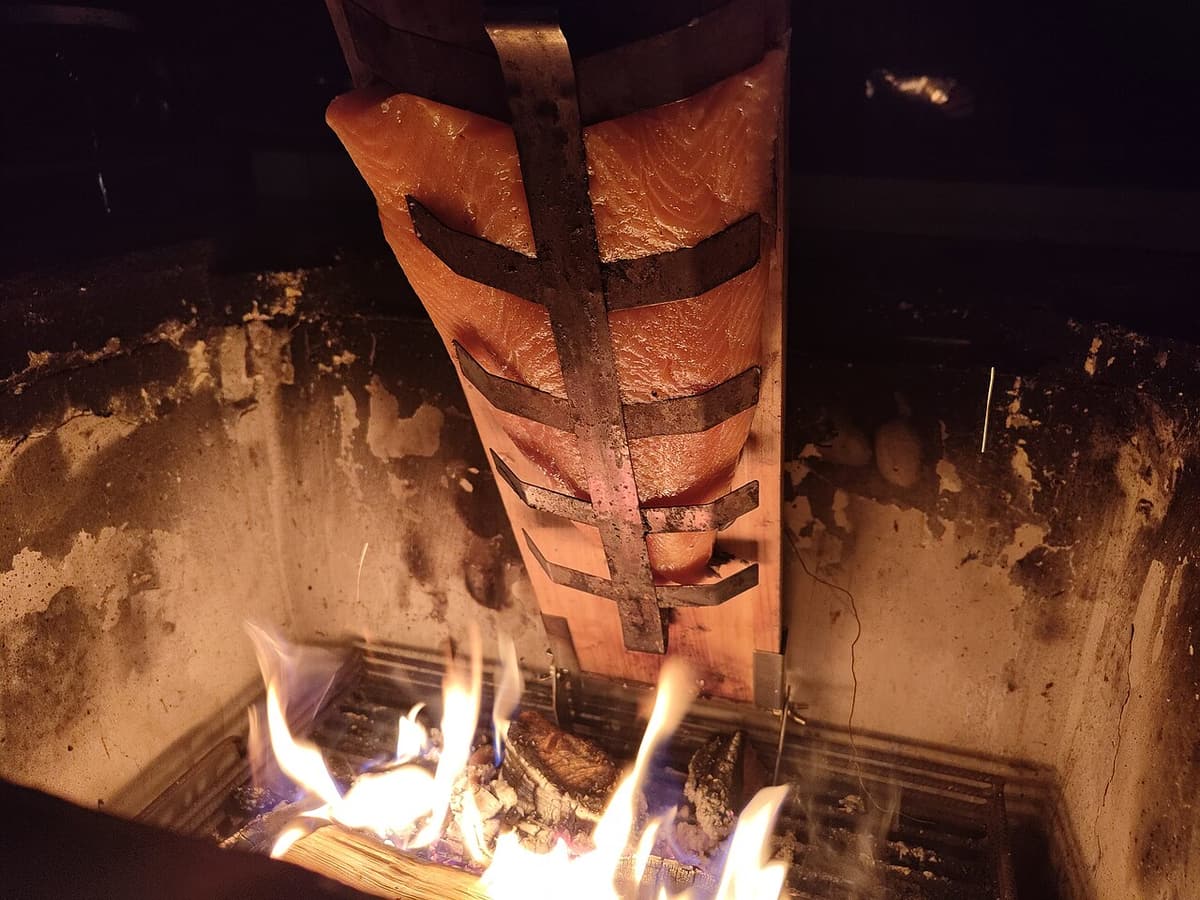
- Flamed salmon (loimulohi): a fillet nailed to a board and cooked beside an open fire.
- Arctic char and whitefish from the northern lakes.
- Squeaky cheese (leipäjuusto): a mild baked cheese, served warm with cloudberry jam.
- Berries: cloudberries, lingonberries and bilberries in desserts, juices and liqueurs.
- Campfire food: sausages grilled on a stick and coffee boiled in a blackened pot — on almost every safari.
Vegetarians and vegans are well catered for in town; tell tour operators in advance for campfire lunches.
Safety and health
- Rovaniemi is very safe. The realistic hazards are icy pavements and cold.
- Buy slip-on ice grips for your shoes from any supermarket; they cost little and prevent the commonest holiday injury.
- Learn the signs of frostnip: skin that turns white and numb, usually on the nose, cheeks, fingers or toes. Warm it at once with a hand or by going indoors; do not rub it with snow.
- Never walk on river or lake ice unless there are established tracks or a guide says it is safe.
- On a snowmobile, listen to the briefing: the driver is liable for damage up to an excess, which can usually be reduced for a fee.
- Travel insurance that covers winter activities is strongly advised.
Good to know
- Sauna: most hotels have one. Shower first, sit on a towel, and nobody minds if you leave when you are hot. Mixed public saunas are used in swimwear.
- Everyman’s right: you may walk, ski and pick berries and mushrooms almost anywhere in the countryside, provided you keep away from homes and leave no trace.
- Reindeer are semi-domesticated and all belong to someone. Do not chase or feed those you meet by the road.
- Sámi culture: the Sámi are the indigenous people of northern Fennoscandia; their homeland in Finland lies further north, around Inari. Learn about it at Arktikum, and buy handicrafts that carry a mark of authenticity.
- Sundays and holidays: shops keep shorter hours. Many restaurants close on 24–25 December, though Santa Claus Village and tours operate.