Rovaniemi lies under the southern edge of the auroral oval, the ring around the magnetic pole where the northern lights are most frequent. That means two things. The aurora appears here often — on a good share of clear nights in the dark season — and when it does, you can sometimes see it from the middle of town. But it is a natural phenomenon that depends on the sun and the clouds, and nobody can promise it on a given night. Everything in this guide is about improving your chances.
The essentials
- Season: from the last week of August to the first days of April. In summer the sky never gets dark enough.
- Best months: September–October and February–March often bring strong activity and clearer skies. December and January have the longest nights but also more cloud.
- Best hours: typically between about 9 pm and 2 am, though displays can start as soon as it is dark.
- What you need: a dark sky, a clear sky and solar activity. You control only the first — which is why getting out of town, and being mobile, matters.
- How long to stay: at least three nights; four or five makes a sighting much more likely.
What causes the aurora
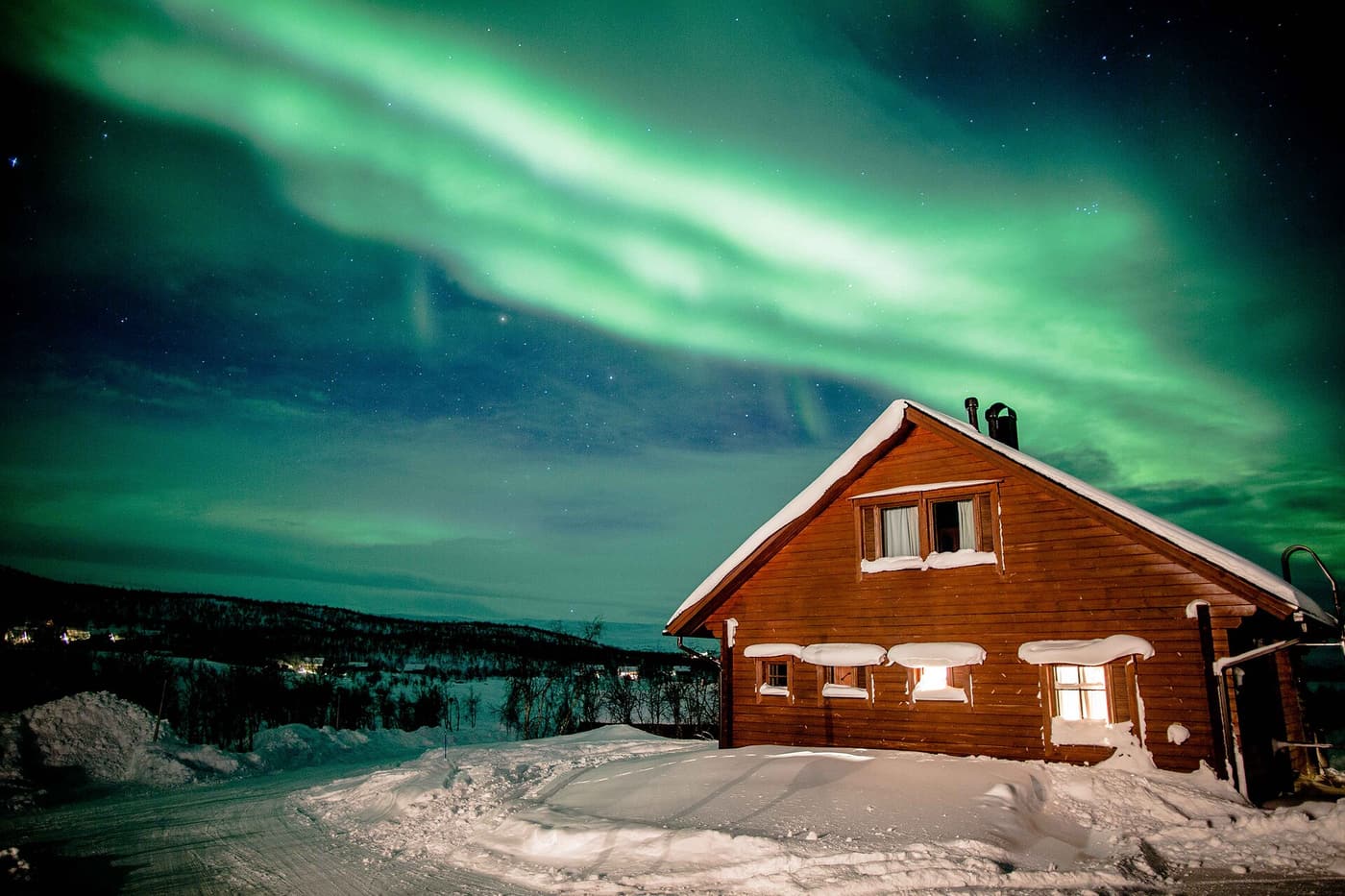
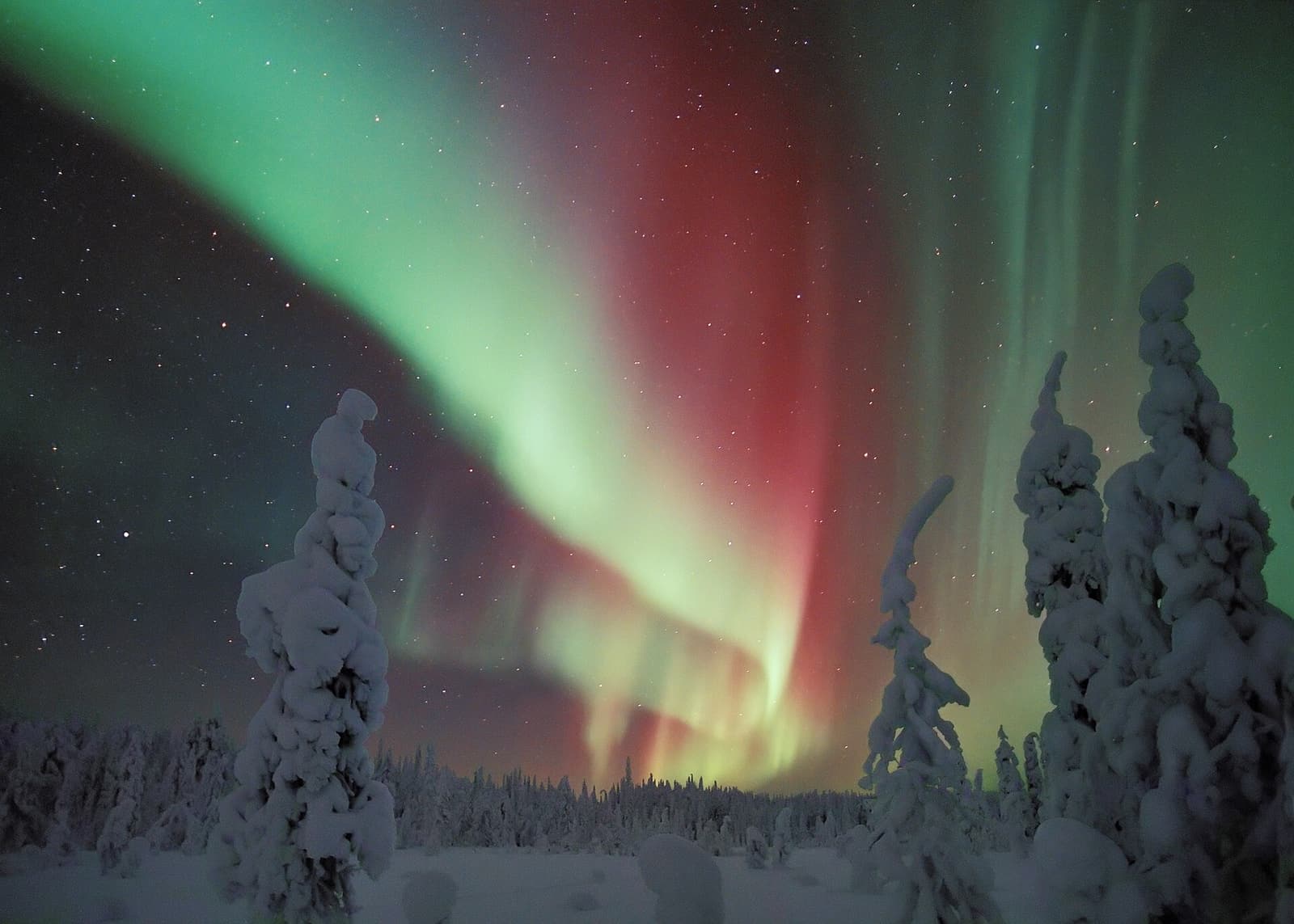
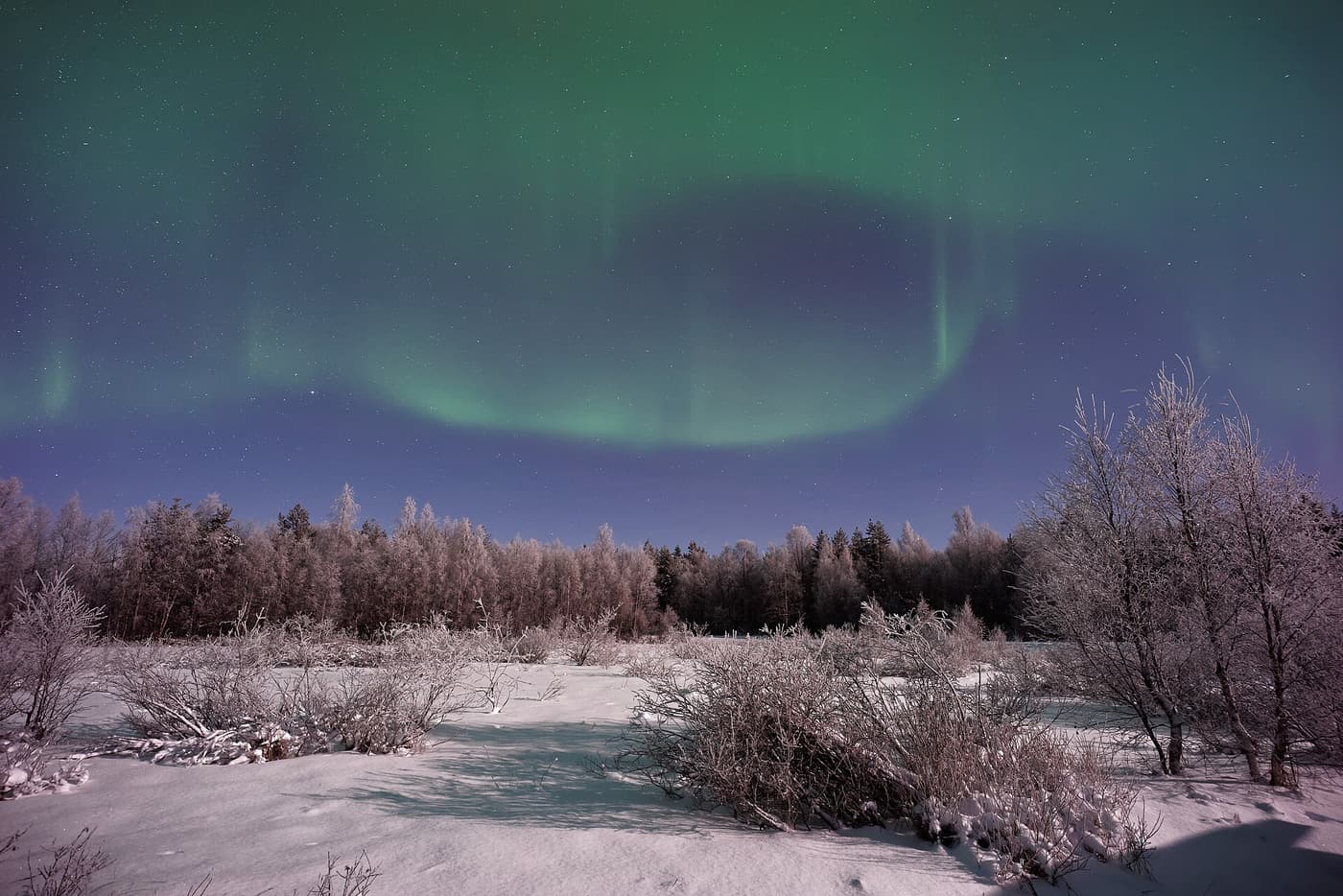
The sun throws out a constant stream of charged particles. When they reach the Earth, the planet’s magnetic field steers them towards the poles, where they collide with gases high in the atmosphere and make them glow: green from oxygen at around 100 kilometres up — by far the commonest colour — red from oxygen higher still, and violet or pink from nitrogen at the lower edge. The Finns call it revontulet, “fox fires”, after the old tale of an Arctic fox sweeping sparks into the sky with its tail.
Activity follows an eleven-year solar cycle, and the middle of the 2020s is a period of high activity. To the naked eye a faint aurora often looks like a pale, greyish-green cloud that moves; cameras, which gather light for several seconds, record far stronger colour than you see. A strong display is another matter: bright green curtains that ripple and race across the whole sky.
Reading the forecast
- Cloud cover is the forecast that matters most. Check the Finnish Meteorological Institute’s cloud maps for the evening; a clear patch 50 kilometres away is worth driving to.
- The Kp index measures geomagnetic activity on a scale of 0 to 9. In Rovaniemi a Kp of 2 or 3 is often enough for a visible aurora on the northern horizon, and 4 or more can bring it overhead. A low Kp does not rule a display out.
- Aurora alerts: the Finnish Meteorological Institute publishes magnetic activity for Lapland, and several free apps send alerts. Many hotels and all glass-igloo properties offer an aurora alarm.
- Moonlight does not prevent a display; a bright moon lights the snowy landscape beautifully in photographs.
 Small-group aurora hunt by minibus from €70
 Rovaniemi: Northern Lights Tour with Guarantee & Photos
Rovaniemi’s most-booked aurora tour, with well over 4,000 reviews. Instead of waiting at one fixed spot, the guides study the cloud and solar forecasts and drive — sometimes a long way — to find a gap in the weather. The listing carries the operator’s guarantee if no lights are seen; check exactly what it covers before you book.
- Guides drive to wherever the sky is clearest
- Photos of you under the aurora included
- Operator’s sighting guarantee — read the terms
 Evening aurora outing from €79
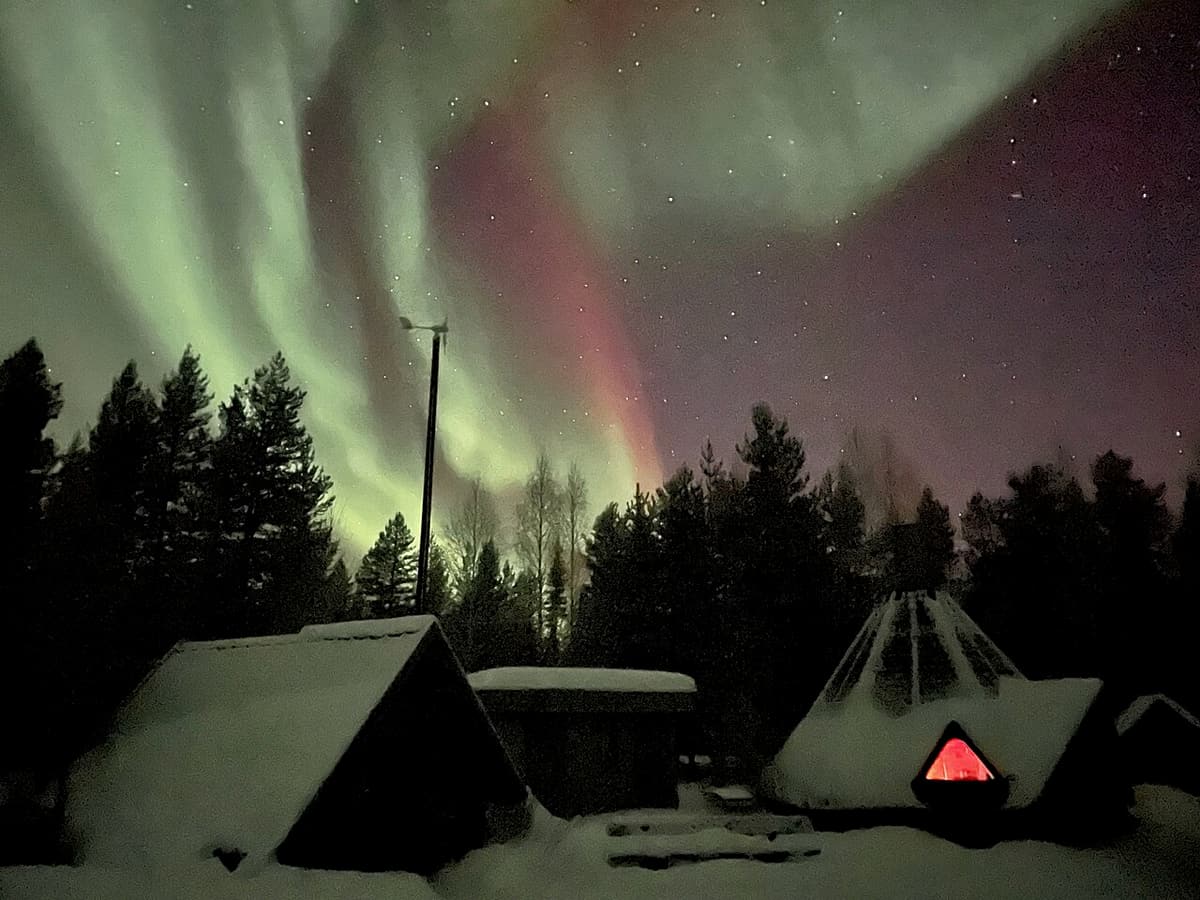
 Rovaniemi: Northern Lights Photography Tour with BBQ Option
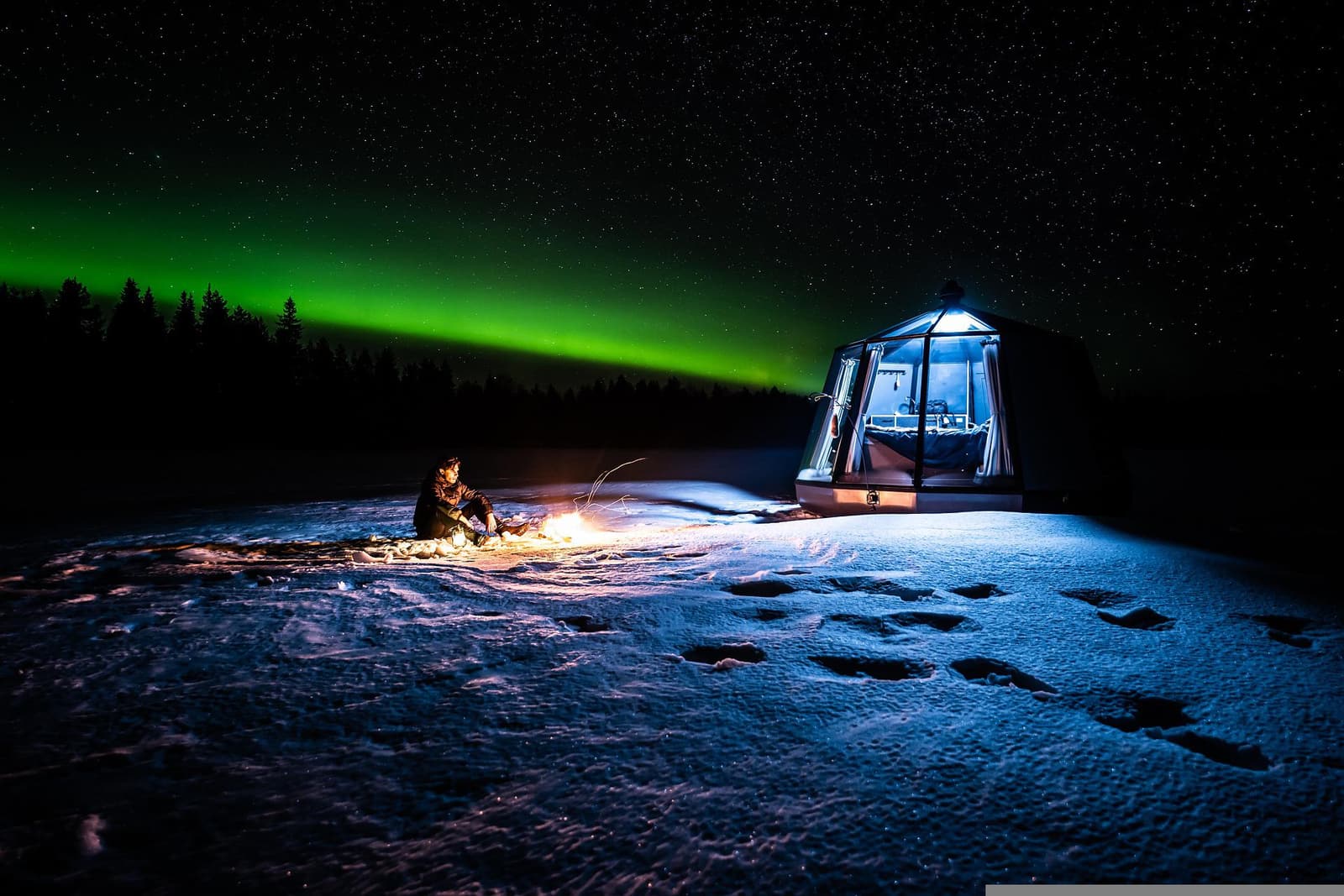
A shorter, cheaper evening for those who do not want to be out until the small hours. You are driven away from the city lights to a lakeside or forest camp, where the guide helps you photograph the sky while a fire keeps everyone warm. It stays in one area rather than chasing clear skies, so pick a night with a good forecast.
- A short drive to a dark spot outside town
- Guide helps with camera settings
- Campfire, with a barbecue option
 Night snowmobile safari from €139
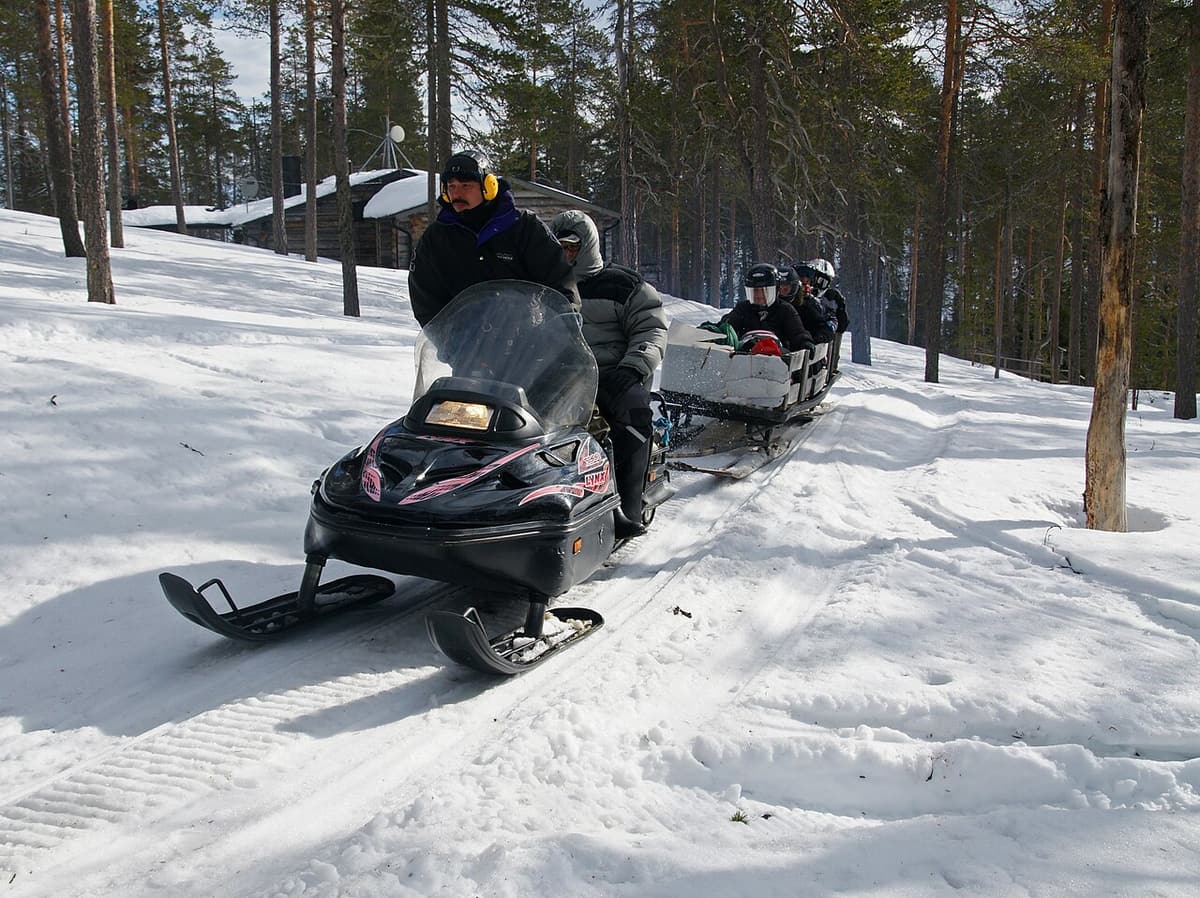
 Rovaniemi: Aurora Borealis Snowmobile Safari with Campfire
A night-time safari that is worth doing whether or not the lights appear. You drive in convoy along frozen rivers and forest trails to a dark clearing, switch off the engines and wait by the fire. Drivers need a valid driving licence; two people normally share a machine, with a supplement for riding solo.
- Ride through the forest by headlight
- Stop at a campfire for hot drinks
- Thermal outfit and helmet provided
 Evening ice floating from €129
 Rovaniemi: Arctic Ice Floating and Northern Lights Tour
One of Lapland’s strangest pleasures: you are zipped into a waterproof, buoyant survival suit and lie back in the icy water of a forest lake, weightless and — surprisingly — warm. With no lights for kilometres, it is a fine place to watch for the aurora. No swimming ability is needed.
- Float in a hole cut in a frozen lake
- Dry rescue suit keeps you warm
- Look straight up at the night sky
 Private dining experience from €145
 Rovaniemi: Private Lappish Dinner in an Aurora Igloo
If you are not sleeping in a glass igloo, this is a way to borrow one for an evening. A private, heated glass dome is set for dinner, with a menu built on northern ingredients. Aurora cannot be promised, but the setting is memorable on any clear night.
- A glass-roofed igloo to yourselves
- Lappish menu
- Sky views while you eat
 Ice floating from €125
 Rovaniemi: Ice Floating in a Forest Lake with Combo Options
The most-booked ice-floating experience, with daytime and after-dark departures. In the evening it doubles as an aurora watch from the water; by day you float under a pale winter sky. Suits are worn over your own warm clothes.
- Floating in a survival suit
- Day or evening departures
- Can be combined with other activities
Tour or do it yourself?
You can see the aurora without paying anyone. But on a short trip a tour does three things you cannot easily do alone: it takes you to properly dark places, it moves when clouds roll in, and it comes with someone who knows what to look for and how to photograph it.
- Chase tours by minibus give the best odds. Guides watch the forecasts and drive — up to a couple of hours if necessary, sometimes towards the Swedish border or north towards Sodankylä — until they find clear sky. They last six to eight hours and get back late. Most include photographs of you with the aurora.
- Fixed-camp tours take you to one lakeside or forest site with a fire and hot drinks for two to three hours. Cheaper, shorter and kinder to children, but if that spot is cloudy, you see nothing.
- Activity tours — by snowmobile, reindeer sleigh, snowshoe or floating in an ice hole — are worthwhile in their own right, with the aurora as a possible bonus.
- “Guarantees” vary. Some operators offer a refund, others a free second outing, if no aurora is seen, and “seen” may mean visible to the camera. Read the terms on each listing.
Where to look on your own
If the forecast is good and the sky is clear, these places need no tour:
- The Arctic Garden behind Arktikum: the riverbank at the north end of the museum faces north across the Ounasjoki and is shielded from the brightest street lights. Ten to fifteen minutes’ walk from the centre.
- Ounasvaara: the open ground near the top of the hill, by the ski slopes and the Sky hotel, is higher and darker. A short taxi ride up; you can walk down.
- The riverside by the Lumberjack’s Candle Bridge: convenient, and the bridge makes a fine foreground, but the city lights wash out fainter displays.
- Santa Claus Village: the forest edge behind the village is reasonably dark, and useful if you are staying there.
- With a car: any lay-by or frozen lakeshore 15–20 minutes out of town, away from street lights — the Arctic Circle Hiking Area car park at Vaattunkiköngäs, or the lakes around Sinettä and Norvajärvi.
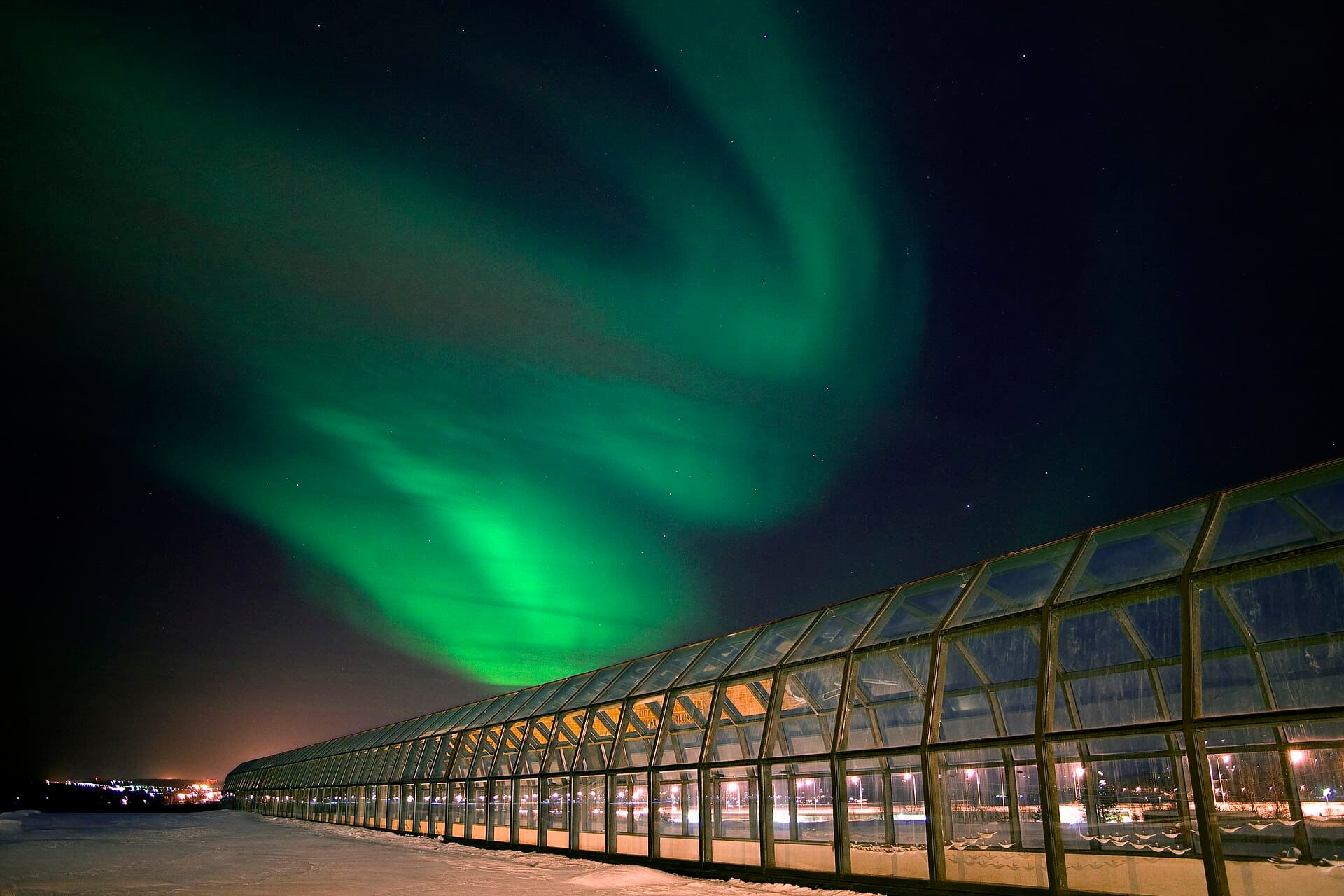
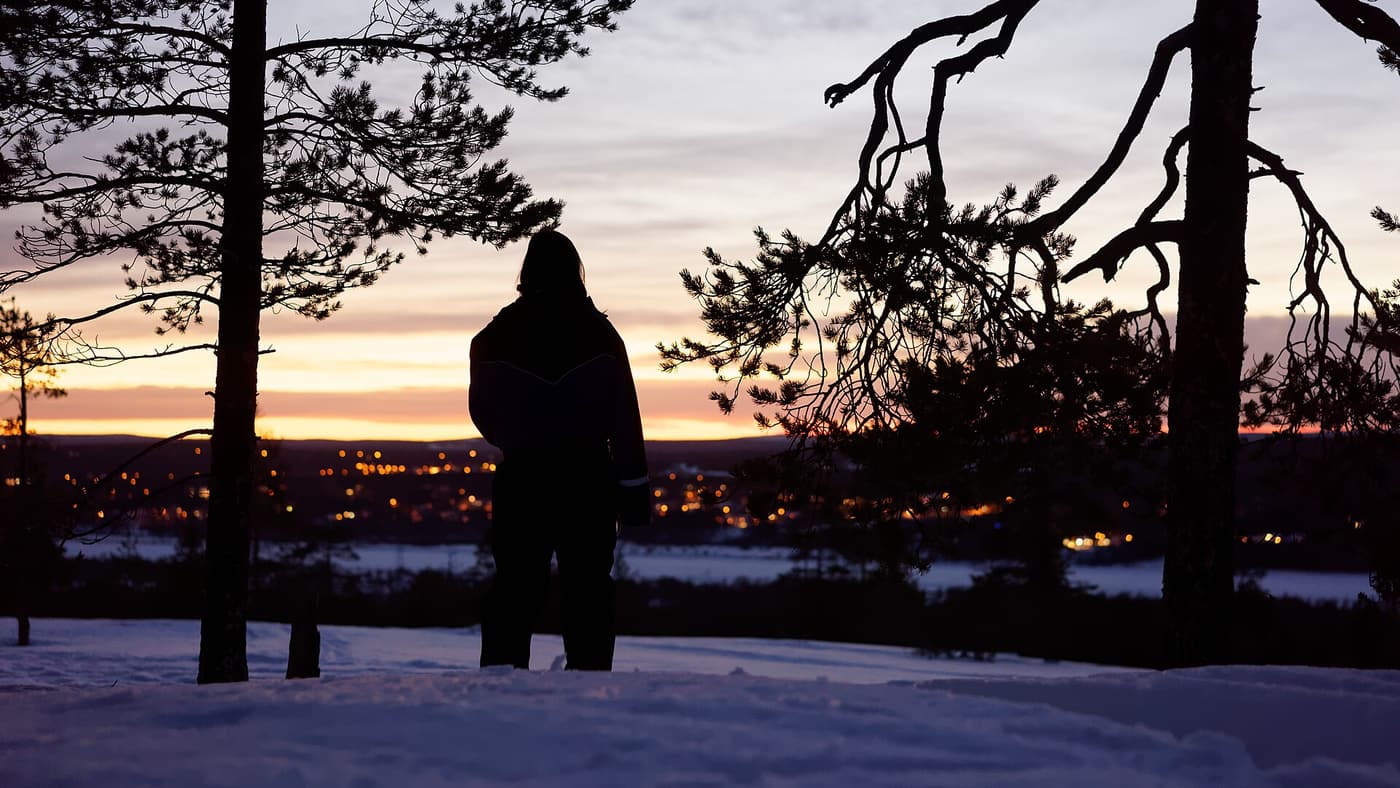
Whichever you choose: dress more warmly than you think necessary, because you will be standing still; give your eyes ten minutes to adjust; and face north first, but look up — a strong display can cover the whole sky.
Glass igloos and aurora cabins
The appeal is obvious: watch for the lights from a warm bed. Rovaniemi has glass igloos and glass-roofed cabins at Santa Claus Village, in the forest near SantaPark, on lakeshores a quarter to half an hour out of town, and at the Arctic SnowHotel. Those outside the city have the darker skies. Many have an alarm that wakes you when the aurora appears.
Keep expectations realistic. A glass roof improves your comfort, not your odds: if it is cloudy, you will see cloud. The surest plan combines one or two igloo nights with a chase tour. Compare the options in where to stay.
Photographing the aurora
- Phone: recent phones do well. Use night mode, hold the phone against something solid or use a small tripod, and turn the flash off.
- Camera: a tripod, a wide and fast lens (f/2.8 or faster), manual focus set to infinity, ISO 1600–3200 and an exposure of 2–10 seconds — shorter when the aurora is bright and moving fast.
- Batteries drain quickly in the cold. Keep spares in an inside pocket.
- Turn off headtorches and screens around other people; it takes minutes for eyes to readjust.
- Most tours include professional photos — so, for some of the time, put the camera away and simply watch.
If the lights do not show
It happens, even on a five-night stay. An overcast week is not unusual in early winter. That is the reason to build your trip around things that are certain — huskies, reindeer, snow, Santa, the sauna — and to treat the aurora as the prize it is. The northern lights theatre at Arktikum is some consolation, and a good reason to come back.