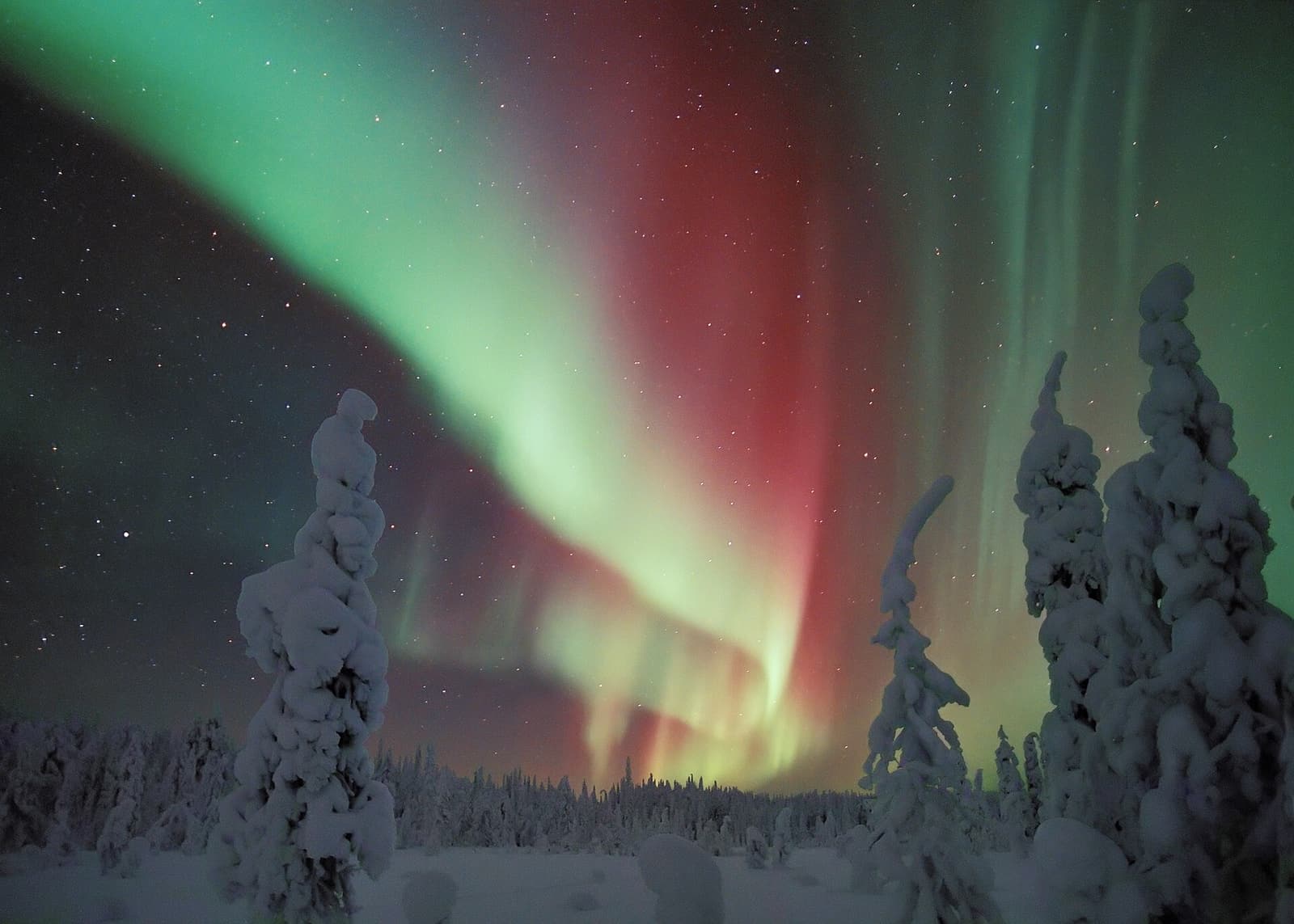
The short answer: for snow, activities and northern lights together, come between mid-January and the end of March — and if you can choose freely, in March. Come in December for Christmas with children, accepting crowds, darkness and the year’s highest prices. Come in June or July for the midnight sun, and in September for autumn colours and the first auroras without the cold.
The Sámi divide the year into eight seasons rather than four, and it is a better way to think about Lapland. The table gives the outline; details follow.
| When | Weather & light | Northern lights | Crowds & prices | Best for |
|---|---|---|---|---|
| Late Nov – early Jan | Snow usually settled by December; −5 to −15 °C; very short days | Possible | Peak. Highest prices of the year | Christmas with children |
| Mid-Jan – Feb | The coldest weeks, often −10 to −25 °C; days lengthening | Good | Quieter in January; busy in school holidays | Snow activities, aurora, value in January |
| March – mid-April | Deepest snow, long sunny days, milder | Good until early April | Moderate | The best all-round winter month |
| Late April – May | Thaw; rivers break up; patchy snow | None (too light) | Very quiet; some things closed | Not recommended |
| June – July | Midnight sun; 15–25 °C; mosquitoes | None | Moderate | Light nights, hiking, river trips |
| August | Warm days, dark nights return late in the month | From late August | Moderate | Berries, hiking, early aurora |
| September | Autumn colours; 5–12 °C | Good | Quiet; lower prices | Ruska, aurora without cold |
| October – mid-Nov | Dark, damp, first snow; little open | Possible | Very quiet | Budget aurora trips |
 Summer evening paddle from €90
 Rovaniemi: Canoe Trip under the Midnight Sun
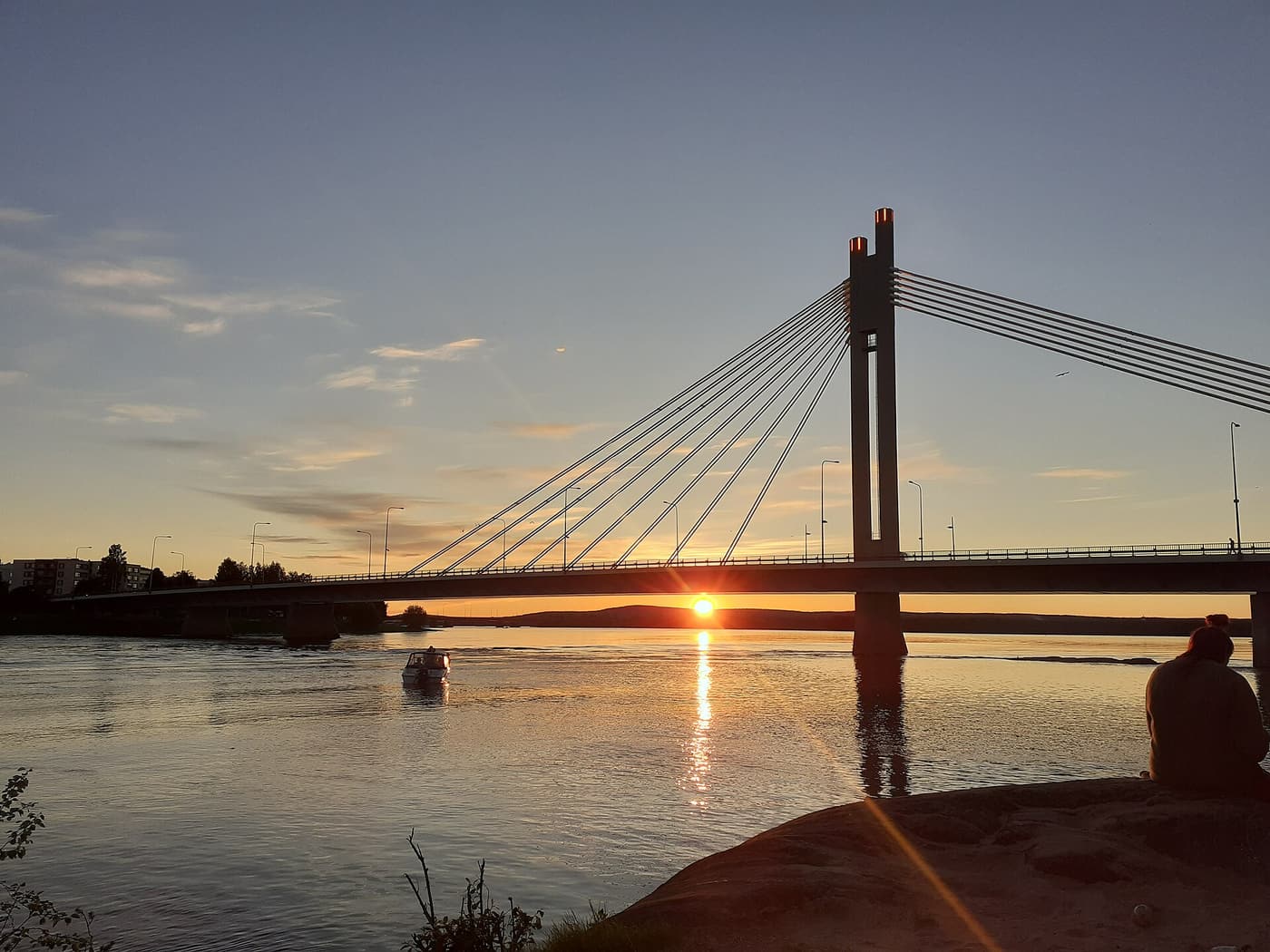
From early June to early July the sun does not set in Rovaniemi. This late-evening paddle takes you onto quiet water in that long, low light, with a guide and a break on the shore. A fine reason to visit outside the snow season.
- Paddle on calm water in golden late-night light
- No experience needed
- Summer only
 Reindeer farm visit from €110
 Rovaniemi: Summer Reindeer Farm Experience
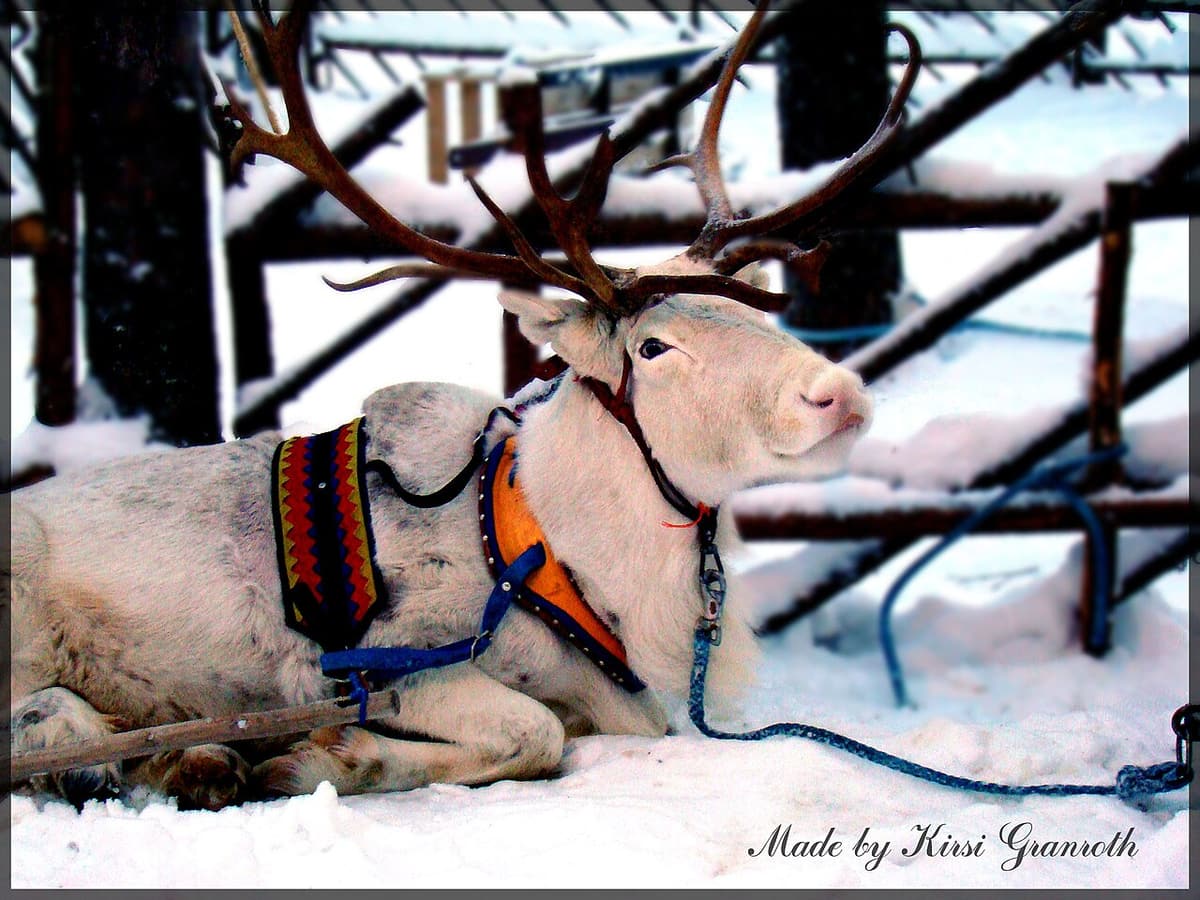
Reindeer do not disappear with the snow. On this summer visit you walk among the animals and hear how the herders’ year turns. There is no sleigh ride without snow, but it is a relaxed, close encounter.
- Meet and feed the herd
- Learn about the herding year
- Runs when there is no snow
 Husky kennel visit + cart ride from €159
 Rovaniemi: Autumn Husky Ride on Wheels
Before the snow arrives the dogs train by pulling wheeled carts, and visitors can ride along. It is fast, muddy and great fun, and the forest in September is at its most colourful. Rated 4.9.
- Dogs pull a wheeled cart on forest tracks
- Autumn colours
- Kennel tour
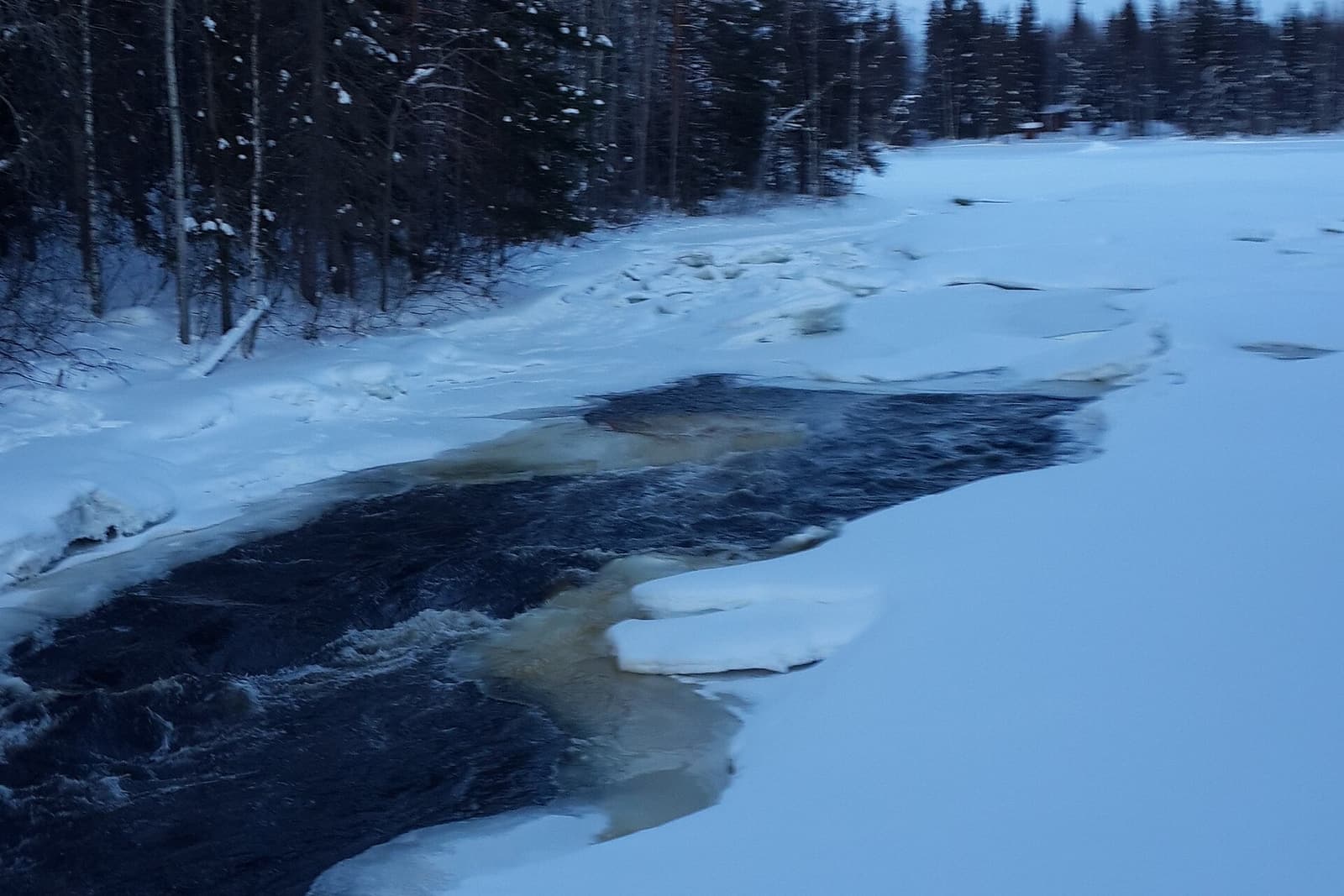 Guided nature walk from €105
 From Rovaniemi: Vikaköngäs Forest Hiking Tour with BBQ
A short guided walk in the Arctic Circle Hiking Area, about twenty minutes’ drive north of town. Duckboard paths follow the Raudanjoki rapids through pine forest to a fire shelter. Easy enough for most ages.
- Rapids, hanging bridge and old pine forest
- Sausages grilled at a lean-to
- Easy trails
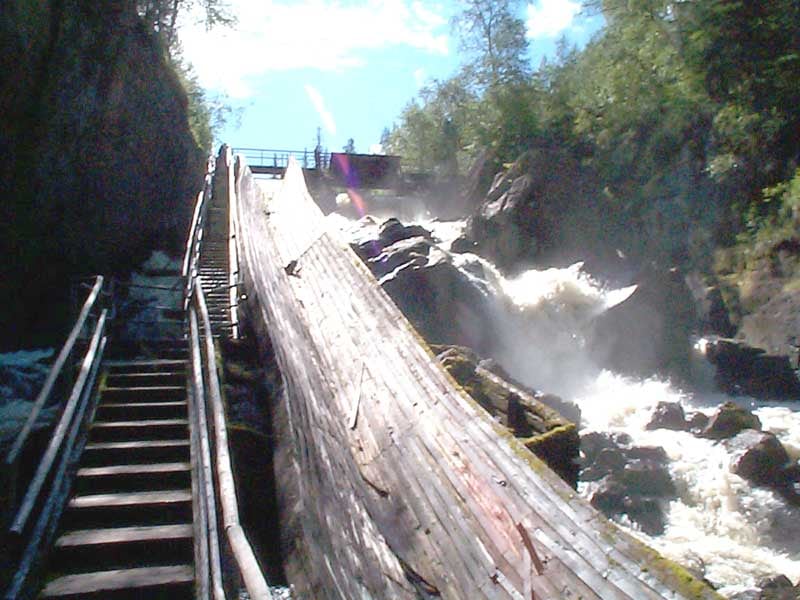 Guided day hike from €139
 Rovaniemi: Auttiköngäs Waterfall Hike & Wilderness BBQ
A day in one of the finest patches of old forest near Rovaniemi. A circular trail of about three and a half kilometres climbs past the falls and the timber chute once used to float logs around them, to a lookout tower above the gorge.
- A 16-metre waterfall in old-growth forest
- Historic log flume
- Lunch over the campfire
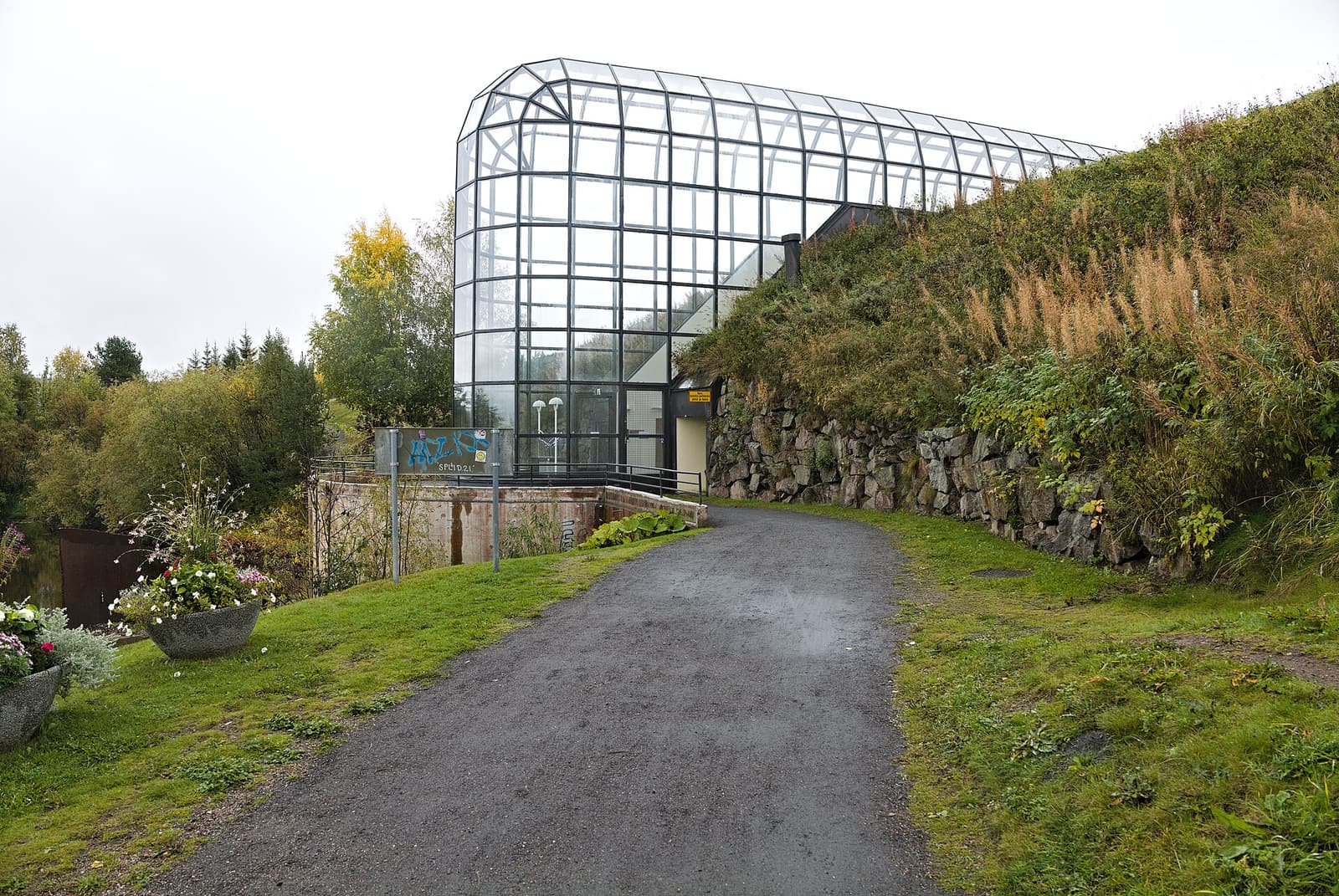 Entry ticket from €22
 Rovaniemi: Arktikum Science Centre and Museum Entry Ticket
Entry to Rovaniemi’s best museum, which explains the Arctic — its climate, wildlife and peoples — alongside the story of Lapland and of the town’s destruction and rebuilding. It is the ideal first stop, and the obvious plan for a very cold or stormy day.
- Arctic science and the history of Lapland
- Northern lights theatre
- Walkable from the city centre
Christmas season: late November to early January
This is when Rovaniemi is most itself — and most overrun. Santa Claus Village glitters, charter flights arrive daily, and every sleigh, sled and igloo is in use.
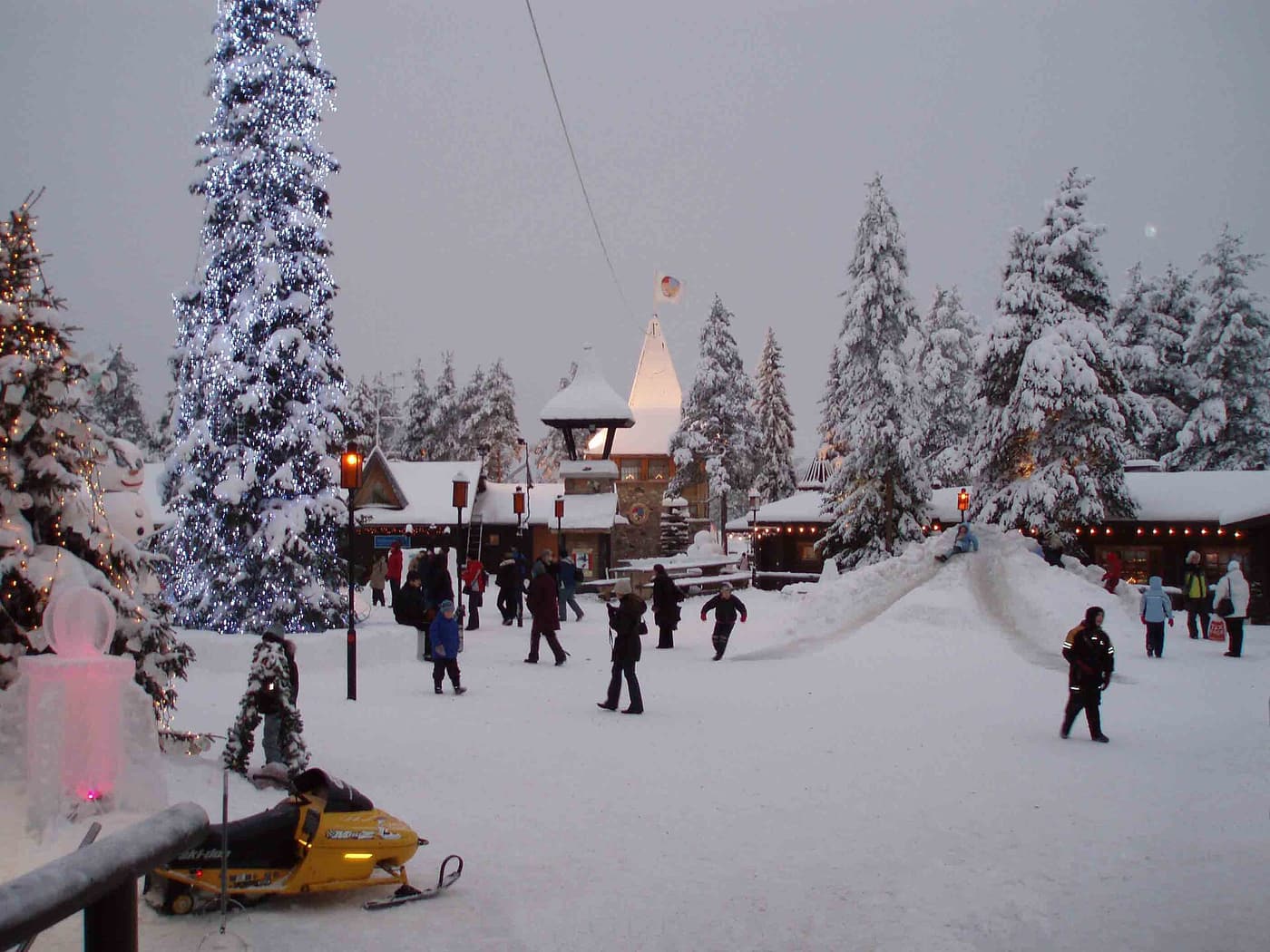
- Prices: accommodation in the weeks around Christmas and New Year commonly costs several times the January rate, and many properties impose minimum stays. Activity prices also rise.
- Booking pressure: glass igloos, family cabins and the best-known safaris are often sold out many months ahead. Six to twelve months is a normal lead time for Christmas week. Sleeper cabins on the night train go quickly too.
- Snow: the ground is usually white by early December, but early winter is variable — in a mild year there may be little snow in late November, and some snowmobile and husky routes open late.
- Light: around two hours of daylight in late December. Plan outdoor sightseeing for midday.
- Queues: the wait to meet Santa can exceed an hour at peak times. Go early or late.
Deep winter: mid-January and February
After the first week of January the crowds vanish and prices fall, while the snow keeps getting deeper. These are the coldest weeks: −15 °C is ordinary, −30 °C happens. Clear, cold nights are excellent for the aurora, and the low sun turns the snow pink for hours. Late February brings the school holidays of several European countries and of Finland itself, and a second, smaller peak.
Spring winter: March to mid-April
The connoisseur’s choice. The snow is at its deepest, the sun is strong enough to sit outside in, days are as long as nights and temperatures are far gentler — often only a few degrees below zero by day. Every winter activity runs, the aurora season continues until the nights grow too light in early April, and prices are well below December’s. The icefalls of Korouoma are at their best. Bring sunglasses.
The thaw: late April and May
The one period to avoid. The snow turns to slush, the river ice breaks up, trails are closed, the trees are bare and many operators take their holidays. Santa is still in residence, but little else is at its best.
Summer and the midnight sun: June to August
From about 6 June to 7 July the sun stays above the horizon all night in Rovaniemi, and for weeks either side it barely gets dark. The town moves outdoors: the riverside beach, terraces, late-night walks on Ounasvaara.
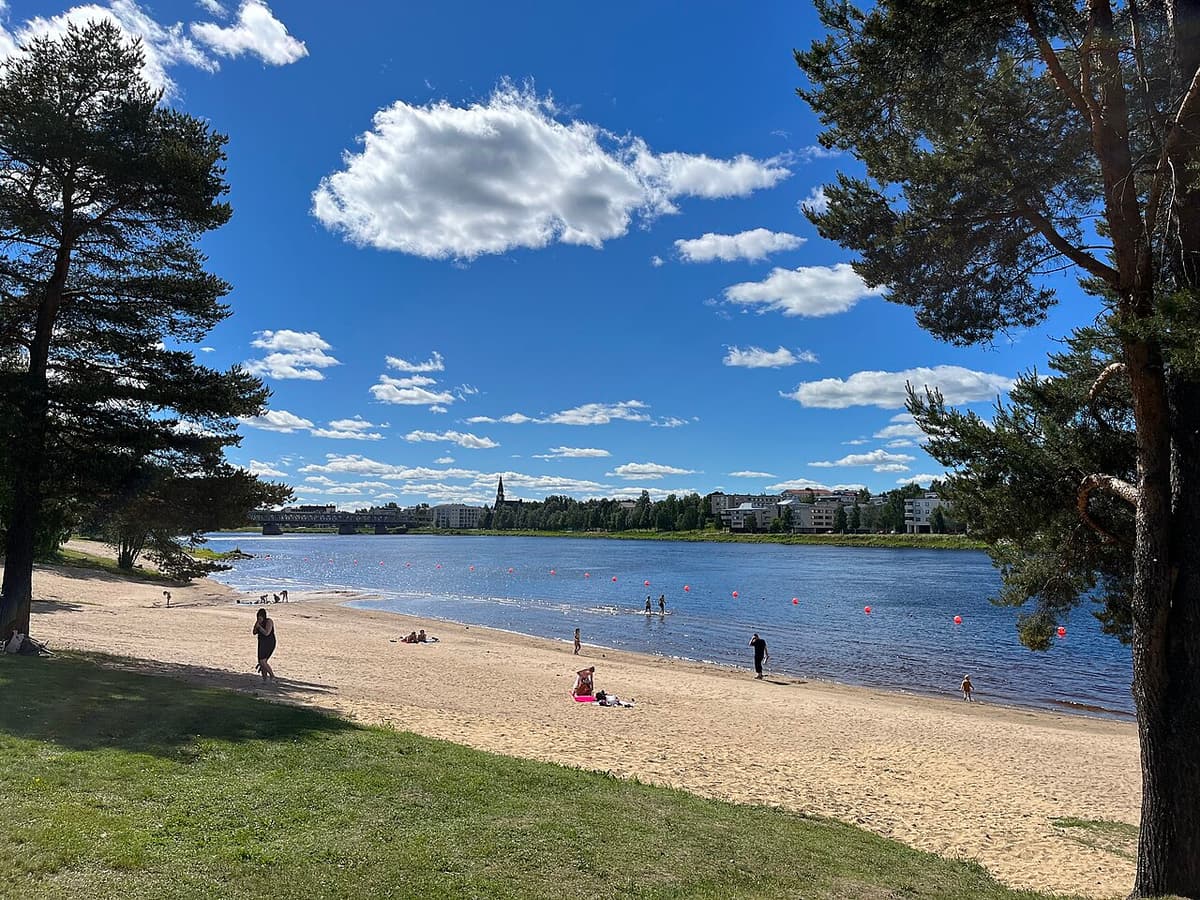
- What to do: river cruises and canoeing on the Kemijoki, hiking at Ounasvaara, the Arctic Circle Hiking Area and Auttiköngäs, summer visits to reindeer farms and husky kennels, cycling and fishing.
- Santa Claus Village is open, green and uncrowded.
- Midsummer (the weekend nearest 24 June) is Finland’s great holiday: bonfires by the water, and many shops and restaurants closed.
- Mosquitoes are plentiful in forest and bog from mid-June to early August. Repellent and long sleeves solve most of it; the city itself is not bad.
- No aurora: the sky is too bright from May until the second half of August.
Autumn and ruska: September and October
Ruska is the Finnish word for the blaze of autumn colour — birches gold, rowan and bilberry scarlet — that sweeps south through Lapland. Around Rovaniemi it usually peaks in the second half of September. The air is crisp, the mosquitoes are gone, nights are properly dark again and the lakes are still unfrozen, so the aurora can be seen reflected in the water. It is the best season for hiking and, with low prices and no crowds, one of the best-kept secrets of the Lapland year. There is no snow, so no sleigh rides — but huskies pull wheeled carts.
By late October the leaves have fallen and the first snow comes and goes. Early November is dark and in-between: cheap, quiet, and a gamble on the weather.
Temperatures and daylight through the year
- January: average about −11 °C; extremes below −30 °C. Daylight 3–5 hours.
- March: average about −5 °C, often above zero in the sun. Daylight 10–13 hours.
- July: average about +15 °C, with warm spells well above 20 °C. Daylight 21–24 hours.
- September: average about +7 °C. Daylight 11–14 hours.
- Snow cover typically lasts from November until late April or early May.
These are long-term norms; individual years vary a good deal, and winters have become less predictable. If snow matters to you, January to March is the safe window.